Power-to-Heat in der Praxis

Operating electric heat transfer oil heaters economically and safely

The electrification of industrial process heat is rapidly gaining in importance. More and more companies are faced with the task of switching their heat supply to electricity and integrating renewable energy sources.

However, the real challenge is not simply switching to electricity. The crucial question is rather: how can security of supply, cost-effectiveness and flexibility be guaranteed simultaneously? Modern production processes require a heat supply that is reliably available at all times, adapts flexibly to changing loads and, at the same time, meets the increasing demands for energy efficiency.

Why the right investment strategy makes all the difference

A reliable power-to-heat concept converts electrical energy – whether from the public grid or from the company’s own renewable sources – directly into precisely controlled process heat. However, the key added value for the business lies not solely in the heat generator. It is the combination of intelligent control, precise regulation and well-thought-out planning that makes electrification an economical and worry-free solution.

For the transition to run smoothly in day-to-day operations, four key factors are crucial:

  1. Compatible with the existing infrastructure

Whether for low power or in the megawatt range: the system must be compatible with the plant’s electrical system. For small to medium-sized requirements, the tried-and-tested 400 V network is used. For large industrial plants in the megawatt range, the use of 690 V is often advantageous: it reduces cabling costs, space requirements and unit costs.

  1. Protection against breakdowns and a long service life

To prevent the components used from wearing out prematurely, the system is controlled by intelligent electronics. The heating elements are switched on and off in turn, ensuring that all parts are subjected to an even load. In addition, the current of each individual heating element is continuously monitored. This detects irregularities at an early stage, protects against unplanned production stoppages and ensures maximum availability.

  1. Actively reducing electricity costs

A modern system dynamically adjusts its heating output. If the heat demand in the process changes or the market price of electricity fluctuates, the control system reacts automatically. This allows you to make targeted use of periods of low electricity prices on the market or surplus energy from your own photovoltaic system to significantly reduce operating costs.

  1. Rapid implementation without long waiting times

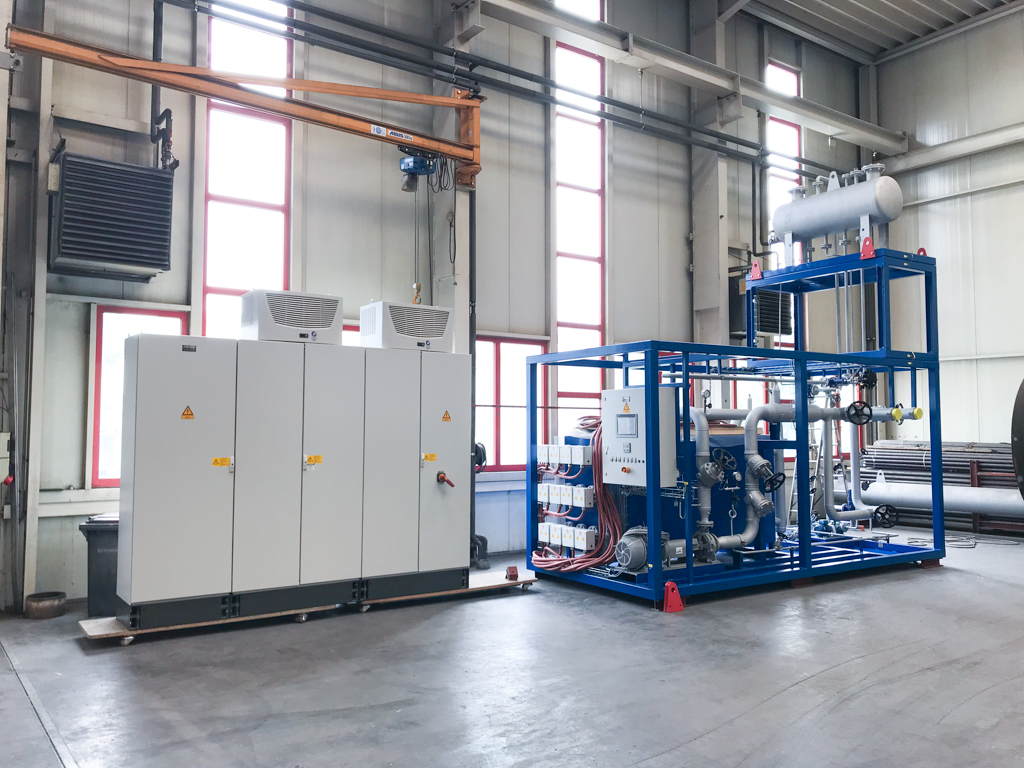
As the heat is generated electrically – and is therefore completely emission-free – directly at the process, there is no need for chimneys, fuel storage or time-consuming emissions-related approval procedures. Pre-assembled complete systems on a base frame (“Plug & Heat”) also reduce on-site installation work to a minimum.

Do you have a specific inquiry? We look forward to hearing from you!

Tested in practice

Numerous NESS systems already in operation demonstrate that these concepts function seamlessly in everyday industrial practice:

  • Wood-based materials industry:
    A 3.1 MW system whose control system responds specifically to external electricity price signals. The result is a highly flexible mode of operation that makes optimal use of volatile energy prices.
  • Chemical industry:
    A hybrid system comprising an electric heater (800 kW) and an existing gas-fired boiler (1 MW) jointly ensures the heat supply at this site.
  • Aerospace industry:
    A 1,000 kW electric heater operates in parallel with a fuel-fired heater, thereby increasing security of supply.
  • Wood-based materials industry:
    Currently equipped with 1,240 kW, expandable to 3.1 MW. Pending the planned expansion, the heater is already supporting heat demand elsewhere; rather than standing idle, it thus creates added value right from the start.

The electrification of industrial process heat involves far more than simply replacing a heat generator. It requires a well-thought-out overall concept that combines cost-effectiveness, flexibility and operational reliability. With bespoke power-to-heat solutions, such as those developed by specialists like NESS, companies can successfully transition to a sustainable heat supply without compromising on day-to-day operations.

Are you planning to electrify your process heat? Get in touch with us – together, we’ll develop the system concept that’s right for your business.

Do you have a specific inquiry? We look forward to hearing from you!

© Copyright NESS Wärmetechnik GmbH | Remsstrasse 24, 73630 Remshalden | Tel. +49 (7181) 96 75 -0 | Fax +49 (7181) 4 26 12 | info@ness.de | www.ness.de